
Home » Careers » Teaching Health Center » El Rio Family Medicine Residency Program » Explore Tucson
Explore Tucson
There is so much to see and do!
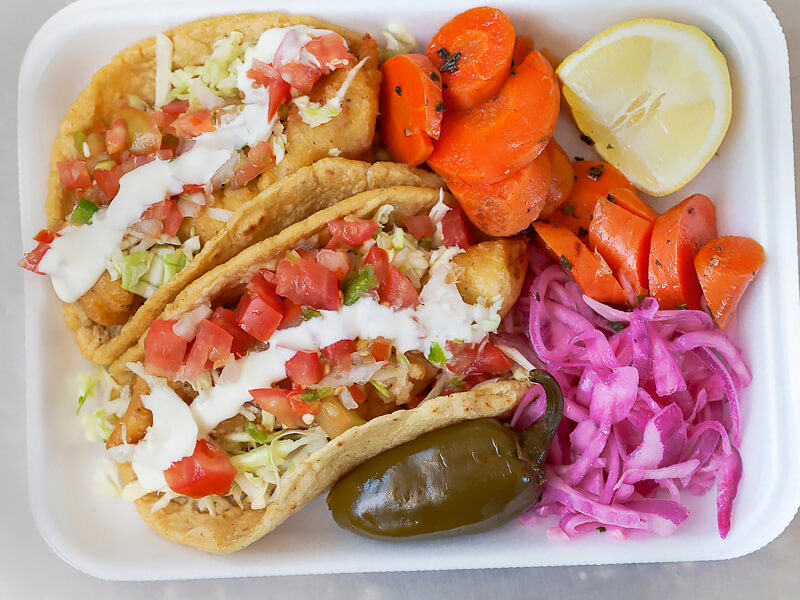
Tucson’s guest ranches, horseback rides, and cattle drives recall Old West roots, but you’ll also find yourself in a hub of spas, resort hotels, and championship golf courses…not to mention amazing, trend-setting restaurants. Tucson was the first city to earn the designation of World City of Gastronomy by the United Nations Educational, Scientific, and Cultural Organization (UNESCO). Plus, with a thriving visual and performing arts scene and respected galleries and museums, Tucson’s vibrant multicultural heritage shines.
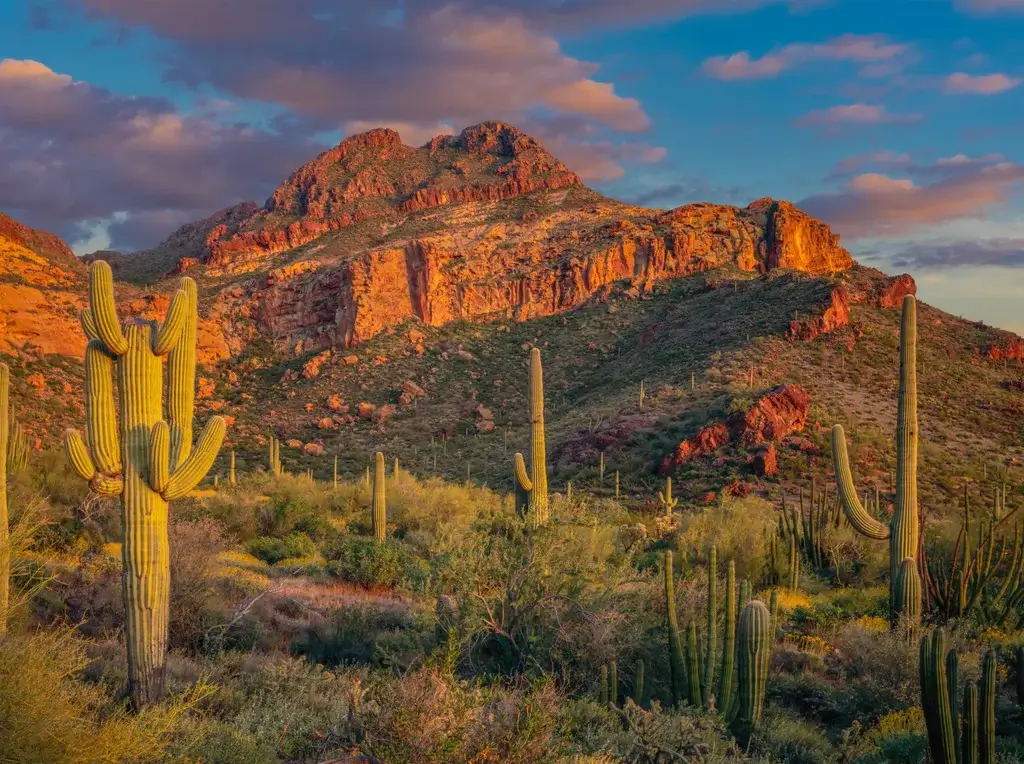
Famous for its dramatic beauty, the Sonoran Desert covers this region with spectacular cacti – including the giant saguaro, a symbol of the American Southwest. But don’t be fooled by the term “desert” because mountain ranges in all directions offer scenic drives, and even snow skiing. In the winter you can go for a hike in the valley, then drive up to Mt. Lemmon and enjoy the slopes. Tucson’s legendary year-round sunshine and saguaro-and-sunset landscape have romanced visitors for decades.
Once you immerse yourself in the laid-back atmosphere of Tucson, you may never want to leave.
Video Transcript
Video Title: Tucson is Wild!
Length: 0:39
Link to YouTube page: https://www.youtube.com/watch?v=KV8xTwLZ0Yc
Transcript
[0:00] [Visual & Music]: Aerial view of a desert, with a mountainside, saguaro cactus, and other vegetation as the camera races backwards. Upbeat and whimsical music.
[0:02] [Visual]: Tall, skinny rock formation rising into the sunset sky with mountains in the background. Camera flies toward the rock formation and passes it on the right.
[0:02] [Visual]: Quick cuts to iconic Tucson scenes including the Pima County Courthouse dome in downtown Tucson, a mural painted on the site of a building, historic Spanish-inspired architecture, the Fox sign, the Hotel Congress neon sign, desert rock formations, and an overhead view of a city street at sunset.
[0:06] [Visual]: Camera pulls back through a cut in a rock face atop a mountain, showing a rugged desert landscape.
[0:07] [Visual]: A chairlift rises up a snow-covered ski slope, on a hill forested with pine trees.
[0:08] [Visual]: Glass plated buildings rise in downtown Tucson, backlit by the setting sun with mountains at the horizon.
[0:09] [Visual]: Modern architecture in downtown Tucson on a sunny, blue sky afternoon.
[0:09] [Visual]: A historic Spanish-mission style church illuminated at night, flanked by palm trees.
[0:10] [Visual]: Aerial view racing up a hillside toward rock pinnacles at the top, with saguaro cactus and vegetation blurring past.
[0:11] [Visual]: Modern architecture and high rise buildings in downtown Tucson on a sunny day.
[0:12] [Visual]: The Hotel Congress sign glows pink with city buildings in the background near sunset.
[0:12] [Visual]: Tucson Convention Center and grounds in downtown Tucson.
[0:13] [Visual]: Cyclists ride a paved road through the desert, seen from overhead.
[0:14] [Visual]: A white car drives down a winding desert road in the mountains, with saguaro cactus and vegetation all around. Camera switches to an overhead view showing the car passing a towering rock formation that casts a shadow across the road.
[0:15] [Visual]: Overhead view of a city street at night outside of the Rialto theater. Cars blur and move with a stop-motion effect showing the passage of time.
[0:17] [Visual]: Panning view along the side of the Pima County Courthouse’s iconic mosaic dome with the city in the background. The camera rotates in the air to look back at the front of the Courthouse.
[0:19] [Visual]: Rugged desert mountains seen from an overlook. An information placard in the foreground reads “Thimble Peak.” The camera moves forward over the placard, then cuts to a different view of the peak as seen from the air.
[0:21] [Visual]: A trolley car moves down a quiet street on the outskirts of Tucson, with high rise buildings in the distance.
[0:21] [Visual]: Downtown Tucson at night.
[0:22] [Visual]: A winding road passes through tall rock formations at the top of a mountain, with glimpses of a valley in the distance.
[0:23] [Visual]: Aerial views of downtown Tucson at night.
[0:23] [Visual]: The view spins and clears to show a mural painted on the side of a building. The mural shows a cowboy and a lady in a Spanish-style dress riding bicycles in the desert. the lady’s pink dress turns into the desert mountains, where a javelina, a tortoise, and a jackalope ride bicycles against a sunset.
[0:24] [Visual]: Another view of the Pima County Courthouse and its mosaic dome.
[0:26] [Visual]: The Fox theater sign illuminated at night on a quiet street.
[0:27] [Visual]: A chairlift reaches the top of a snow covered ski slope. In the distance beyond, the snow gives way to bare lower mountains and the desert valley.
[0:28] [Visual]: Camera follows a winding paved road that climbs a mountainside with rock pinnacles ahead, bordered by saguaro cactus and desert vegetation. Text: Visit Tucson VisitTucson.org
[0:31] [Visual]: Fade to black, text remains: Visit Tucson VisitTucson.com
[0:35] [Visual & Music]: Text fades to black. Music fades out.
Video Transcript
Video Title: America's Best Mexican Food - Episode 3: El Charro
Length: 5:21
Link to YouTube page: https://youtu.be/YeYdM6LQf_U?si=BvkaqmH4AERVaYSz
Transcript
[0:00] Visual: Screen fades from black to an arial view of Tucson
[0:01] Audio: Spanish style of song starts playing
[0:01] Visual: Screen changes to a view of the El Charro restaurant
[0:03] Visual: Screen changes to a view inside the restaurant by the door of the kitchen with a waiter coming out with food then shifts to a view of Chef Carlotta sitting down speaking
[0:06] Chef Carlotta: We can be without a lot of things but you can never run out of beer and you can never run out of guacamole.
[0:11] Visual: Screen changes to a waiter delivering beer and guacamole to a table and then changes back to Chef Carlotta
[0:12] Chef Carlotta: Because beer and guacamole are like synonymous to the average person of going to have Mexican food.
[0:18] Visual: Screen changes to an zoomed in shot of chips and guacamole and then changes back to Chef Carlotta
[0:19] Chef Carlotta: But if they have, you know, beer, guacamole, and chips, they kind of leave you alone. My name is Carlotta Flores. I’m the chef owner of El Charro
[0:29] Visual: Screen changes to a view of the outside of El Charro and then a zoomed in shot of a table of different Mexican dishes with text on the screen “America’s Best Mexican Food Tucson, Arizona”
[0:32] Audio: Music picks up a bit and gets louder
[0:34] Visual: Screen changes to a zoomed in shot of a Mexican dish with text on the screen “Episode 3 El Charro” and then to four other dishes
[0:43] Visual: Screen changes to a view of the outside of El Charro with patrons outside and then to Chef Carlotta sitting down in same spot as earlier in the video
[0:45] Chef Carlotta: People when they visit, you come to Tucson to see the desert museum.
[0:47] Visual: Screen flashes between shots of the Arizona Sonora Desert Museum, wildlife, a stingray petting attraction, a large white building, and then back to Chef Carlotta
[0:49] Chef Carlotta: You go to the mission and if you start to tie all that in, you want to add to this culture trip that you’re looking at of eating Mexican food. Not only because we’re a city of astronomy.
[0:55] Visual: Screen flashes from ribs on a grill, a plate of tacos, a cook putting condiments on a hot dog, and back to Chef Carlotta
[1:01] Chef Carlotta: Not only because per capita we have more Mexican restaurants per square mile, probably more than any other city in the United States.
[1:03] Visual: Screen flashes from different Mexican restaurants and dishes and then back to Chef Carlotta
[1:10] Chef Carlotta: These choices have created a beautiful scene of Mexican food in Tucson, Arizona.
[1:15] Visual: Screen flashes from different Mexican dishes, then to a black and white view of the original El Charro, and then back to Chef Carlotta
[1:19] Chef Carlotta: The restaurant started in 1922. My aunt had one lady that worked with her. And her and this young woman would make the lunch for the day.
[1:28] Visual: Screen flashes from different black and white images of the original El Charro and back to Chef Carlotta
[1:28] Chef Carlotta: She used to say that the food was worth it as far as the wait because it was so delicious and nothing should be rushed.
[1:36] Visual: Screen changes to a view of zoomed in tamales and back to Chef Carlotta
[1:37] Chef Carlotta: [inaudible] are very personal because you do tamales when you’re happy, you do tamales when you’re sad and you do tamales to remember families that have gone before us. I don’t think I’ve ever had a bad one. They’re all a little bit different. You could probably put ten red chili tamales in front of me and each of them would be good but each of them would be different.
[1:45] Visual: Screen flashes between different Spanish paintings and artwork, tamale dishes, and back to Chef Carlotta
[1:56] Chef Carlotta: We happen to have tamales of different flavors. They are an envelope of what a family is about wrapped in this little wrapper of a husk. The chimichanga is wonderful. It’s a wonderful word. The word is sexier than the food [laughs].
[2:15] Visual: Screen changes to a zoomed in shot of a chimichanga dish and Chef Carlotta
[2:16] Chef Carlotta: We have or lore going on, or did, with uh the [inaudible] restaurants in Phoenix because they also said they created the chimichanga. And it’s like the Clampetts and the McCoys but it’s a joke. We know that there were chivichangas which people used with goat out of the frontier kind of thing.
[2:33] Visual: Screen changes to a black and white image of a Chef Carlotta and her aunt, back to Chef Carlotta, and then videos of someone rolling a chimichanga and placing it in a fryer and lastly with it plated
[2:34] Chef Carlotta: In our case, we lived with my aunt. Parents went out, all the kids were hungry, and she was making little burrows, little tiny ones, and the oil was still left in one of the fryers and it was still hot. And one of the girls knocked her down, the burrow fell into the deep fryer, she went to say the cuss word and she changed it and called it chimichangas. And here we go it was a deep fried little burrow which basically meant thingamajig or little monkeys. It didn’t really go on the menu and so when we took over the restaurant, we brought back he chimichanga and it became big. It’s kind og just one of those words like nachos that has kind of taken over, but there’s no doubt that the word itself makes you want to dance. And what’s inside is delicious because you can put anything inside the tortilla and wrap it up and deep fry it and here we go. And now we sauce them, we add cheese, and guacamole, and salsa, and it’s you know a Mexican flag on your plate.
[3:25] Visual: Screen flashes from a cook filling a tortilla with ingredients, to Chef Carlotta, additional preparation of a chimichanga, and a plated chimichanga with text on the screen “El Charro Carne Seca Chimichanga”
[3:43] Chef Carlotta: Now Carne Seca, you either like it or you don’t. There’s no in-between. Carne Seca was really a form of preservation. It was a way not to have meat spoil on you. This restaurant is basically grandfathered to hang the meat outside.
[3:48] Visual: Screen flashes to a plated Carne Seca Chimichanga, back to Chef Carlotta, then an El Charro Carne Seca sign outside, then Carne Seca meat hanging outside, then a cook hanging the meat on the line with close up shots of the meat
[4:04] Chef Carlotta: And we have a gentleman that is trained to do slice the meat and it’s marinated in garlic and lime juice. And it’s out there anywhere between 24-36 hours.
[4:14] Visual: Screen changes to a close up shot of the meat in a pot and back to Chef Carlotta and a plate of the Carne Seca dish
[4:15] Chef Carlotta: The meat then is put in and shredded. It is something that we make as either [inaudible] eggs, or soups called [inaudible], or we do mini chimis or big chimis, or we just do it on a plate with a wonderful flour tortilla or corn tortilla and eat what we call a [inaudible] where we take a little bit and put it in a tortilla and eat it. And that’s it.
[4:41] Visual: Screen changes back to Chef Carlotta
[4:42] Chef Carlotta: First of all when they visit my restaurant, I hope that in their minds they feel what Tucson is about. Uh I hope that they see that it’s not as a zillion freeways. That we still have open areas, beautiful places to visit and see, good food to eat, people that care. We serve damn good food and we have to be proud of it.
[4:51] Visual: Screen flashes between different shots of Tucson, people eating, people biking outdoors, the Carne Seca hanging, a Mexican dish, Chef Carlotta, the outside of El Charro with patrons outside, and the screen fades to black
[5:14] Audio: Music begins to fade out
[5:15] Visual: Black background with text on the screen “AmericasBestMexicanFood.com Visit Tucson”